
Using negative keywords is one of the most common Google Ads optimisation tips.
You’ve likely been told over and over again to add negative keywords to avoid irrelevant traffic and wasted ad spend.
And for good reason. Negative keywords have always been an effective way to control your search terms.
But the shift towards smart bidding and looser keyword match types necessitates a different approach to using negative keywords.
Before we dive into how overusing negative keywords could actually be killing your Google Ads campaign performance, it’s important to understand the difference between manual and smart bidding.
Manual vs smart bidding
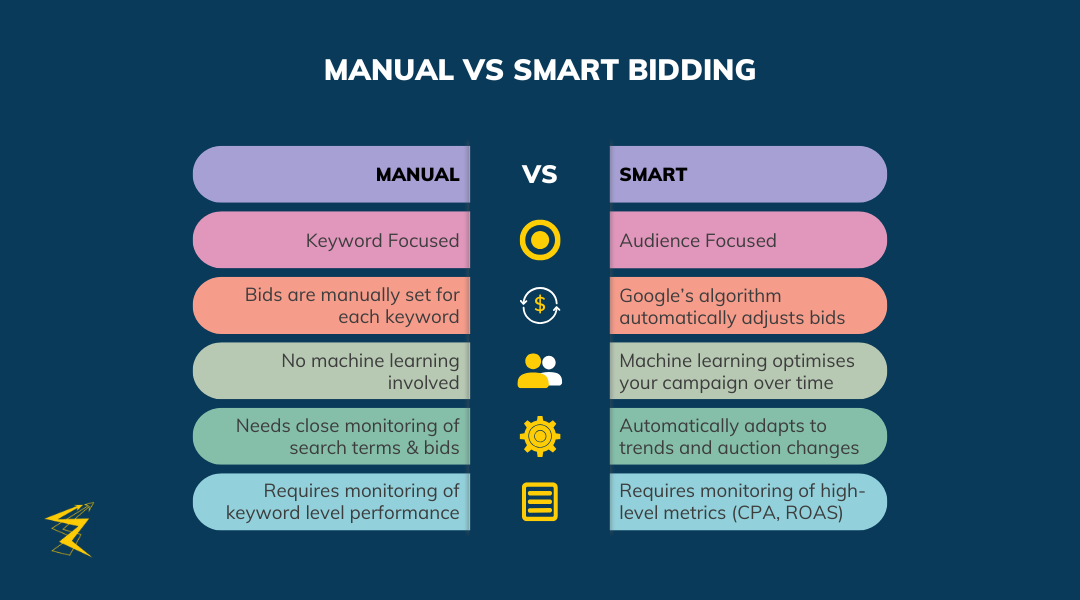
Manual bidding is a keyword focused bid strategy and it has traditionally been the go to strategy for lead generation campaigns.
It gives you almost full control over your target keywords and enables you to choose the maximum amount you’re willing to pay per click.
Notice that I mentioned it almost gives you full control over keywords? The reason for this is that keyword match types are increasingly moving towards meaning-based targeting.
For example, exact match keyword targeting now also matches with close variants for that keyword.
With smart bidding, Google’s algorithm is trying to match your ads with people who are most likely to convert.
The key difference is that smart bidding is an audience focused strategy.
It’s important to understand that smart bidding uses your target keywords as a guide and it won’t exclusively target the keywords you input.
Smart bidding finds audiences who will convert
The primary aim of smart bidding is to match your ads with people who are most likely to purchase your products or services, regardless of the search term they typed in.
Google’s algorithm has a whole wealth of background information about the searcher, such as their:
The algorithm can leverage this data to determine the buying stage that the searcher is in and the likelihood of a conversion at the time that they search for your products or services.
Negative keywords could be losing you sales
We know that with smart bidding, the search term is less important than the actual person behind the search.
By constantly adding negative keywords, you’re actually limiting Google’s ability to tap into the data it has about the searcher.
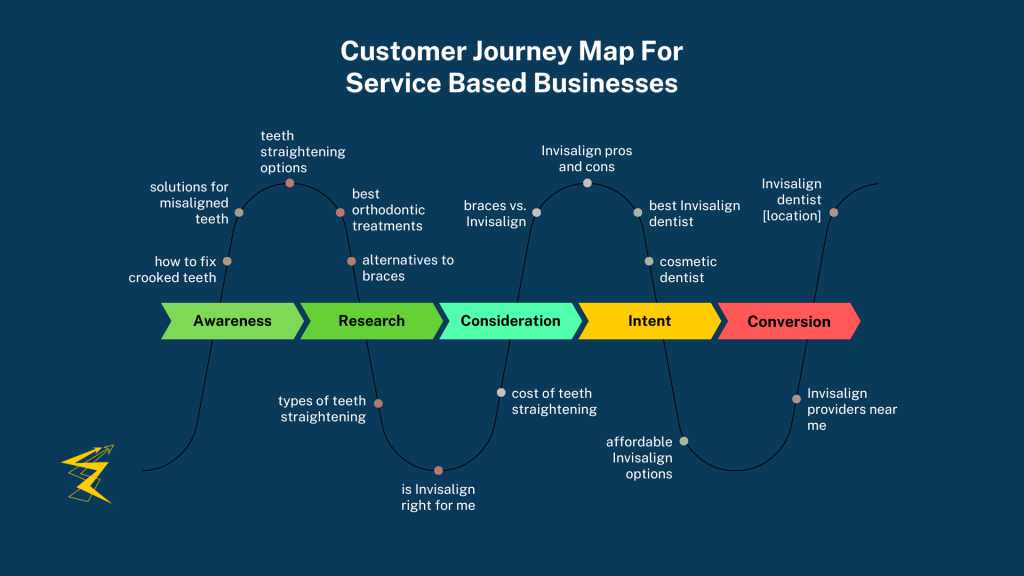
Let’s say you’re a dentist who is advertising Invisalign services.
A potential patient who is not familiar with Invisalign may start by searching for “teeth straightening options”.
After that, they could start comparing “Invisalign vs braces”.
By the time they’re close to making a purchase, they could search for “cosmetic dentist”.
If you excluded the phrase “cosmetic” from your campaign because it’s not specific enough to Invisalign, you would likely lose a new patient lead.
That’s why it’s important to trust Google’s algorithm a bit more and give it space to leverage its knowledge of each searcher’s buying journey.
How to balance negative keywords with smart bidding
To be clear, I’m not saying to ditch negative keywords entirely as they are still an effective way to minimise irrelevant traffic.
You just need to find a balance between negating irrelevant traffic and allowing the algorithm to go through its learning phase.
Here’s what I recommend:
Using the previous example, if the search term “cosmetic dentist” was consuming a significant percentage of your spend and not leading to conversions, it would still make sense to add it in as a negative keyword.
Final thoughts on negative keywords
There is one key take away I would like you to take from this article, and that is to stop micromanaging search terms if you’re using smart bidding.
There is no doubt that negative keywords still play an important part in successful Google Ads campaigns. But there is a real risk of overdoing it and negatively (pun intended) impacting your campaign results.
Put simply, Google knows far more about your target audience’s search patterns and buying behaviour than you do. Allow it to leverage this data to achieve better results with your campaign.
